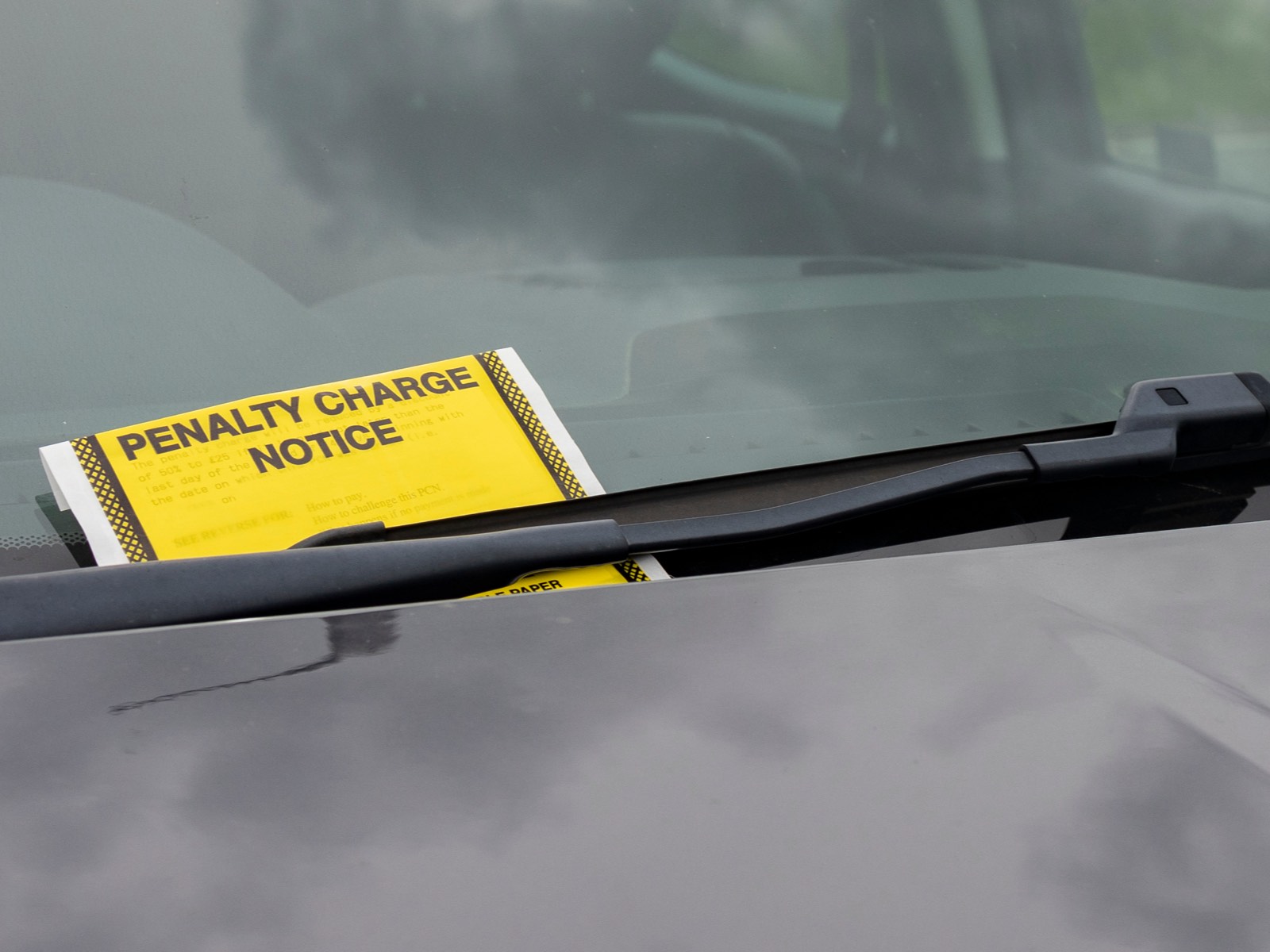
Who pays a PCN or speeding fine on a company hire car? How liability works for fines and tolls, and how to set a simple policy.
A member of staff hires a car for a client visit, parks in the wrong bay, and three weeks later a penalty charge notice (PCN) on the hire car arrives at the company. Who pays it, and does the business have to pass it on?
The short answer is that the hirer usually ends up liable, and on a business hire the hirer is often the company. This guide explains how parking tickets, speeding fines, congestion and clean air zone charges and toll penalties work on a hire car, and how to set a simple policy so they don't land on someone's desk with the discount already gone.
If a council PCN isn't paid, the formal notice goes to the registered keeper, which for a hire car is the rental company. But in England the law lets a hire company pass liability to the hirer. Where the hirer has signed a statement of liability, the hire company can ask the council to transfer the penalty, and once the council accepts, the hirer pays it (regulation 6 of the Civil Enforcement of Road Traffic Contraventions (Approved Devices, Charging Guidelines and General Provisions) (England) Regulations 2022). The Traffic Penalty Tribunal says the hirer will be liable for any PCNs issued to the vehicle while it was on hire (Traffic Penalty Tribunal).
So who is the hirer? If the hire is booked in the company's name and someone signs for the business, it is usually the company. If an employee books and signs personally, it may be them. That is worth deciding before anyone books, not after a ticket arrives.
AMT's rental terms and conditions make the hirer liable for fixed penalties, excess charges, charges for parking on private land, and congestion charges and the penalties for not paying them. The terms also say the hirer must pay AMT's administration charges relating to these. Anyone signing on behalf of a company must be authorised to do so. Check your own hire agreement for the details that apply to your booking.
The biggest avoidable cost with hire car fines is time. Outside London, council parking PCNs in England and Wales are usually discounted by 50% if paid within 14 days of a ticket on the windscreen, or 21 days for camera-enforced contraventions. If a PCN goes unpaid, a charge certificate adds 50% to the full amount (Traffic Penalty Tribunal).
How much of that window you get depends on how your hire company handles notices. When a PCN or parking charge comes in for an AMT hire car, AMT uses the issuing authority's own process to have it reissued to the hirer's name and address. The new notice comes to you directly, so you still have the full period to pay, including the discount window (14 days, or 21 for camera-enforced tickets). If you hire elsewhere, ask how fines are dealt with: if a hire company pays a fine and recharges it to you, you can't challenge it yourself, and you may pay an administration fee on top.
Either way, if staff tell someone the same day they find a ticket on the windscreen, the business can pay at the discount or decide to challenge it in time.
Car parks run by private operators issue parking charge notices rather than council PCNs. The rules for hire cars are in the Protection of Freedoms Act 2012. The hire company can pass the charge to the hirer by sending the parking operator a statement naming the hirer, a copy of the hire agreement and the hirer's signed statement of liability, within 28 days starting the day after the operator's notice to the keeper was given. The operator then sends a notice to the hirer (Protection of Freedoms Act 2012, Schedule 4). These rules cover England and Wales. Elsewhere, check your hire agreement for what applies.
In October 2026 the government published its response on a new private parking code of practice, keeping the £100 cap on parking charges (MHCLG, private parking code of practice: government response, 20 October 2026). The government's response proposes no change to the 2012 Act's rules, including the hire car route.
Speeding is different, because the penalty belongs to the driver, not the vehicle. The police send a notice of intended prosecution and a Section 172 notice to the registered keeper, and the Section 172 notice must be returned within 28 days naming who was driving (GOV.UK, speeding penalties). With a hire car, the hire company names the hirer, and if the hirer is a company, the police will ask the company who was driving.
That makes it important to know who had each hire car and when. Failing to identify the driver is an offence in its own right: an individual gets 6 penalty points (GOV.UK, endorsement codes), and a company that fails to name the driver can be prosecuted and fined (Road Traffic Act 1988, section 172). Keep a simple log of who drove which hire car, with dates, so you can answer quickly.
These are charges for using a road or zone, and the driver usually has to pay them directly. A hire car won't normally have an account set up for your business. If a charge is missed, the penalty follows the same route as a PCN and, under AMT's terms, the hirer is liable for congestion charges and the penalties for not paying them.
A short line in your travel policy, "check for congestion, clean air and toll charges on your route and pay them the same day", prevents most of these.
It can be. HMRC's guidance says that where a car is registered in the employer's name, an employer paying a parking penalty has no tax consequences for the employee. Where the penalty is the employee's own debt, the employer paying it counts as the employee's earnings (HMRC Employment Income Manual, updated 11 September 2026). A fine that is the business's own liability isn't deductible for tax. Where the business pays a fine that is an employee's personal liability, it is normally taxed as the employee's earnings and may then be deductible (HMRC Business Income Manual).
HMRC's guidance doesn't deal with hire cars by name, and a speeding fine is the driver's own penalty. If the business plans to pay fines for staff, check the treatment with your accountant.
Our guides to choosing between a hire car and an employee's own car and to VAT and tax on business car hire cover the other policy points, and our guide to replacement cars for business explains hire when a fleet car is off the road. The grey fleet guide from AMT Insurance Solutions covers checks for staff who drive their own cars.
AMT offers short and long-term car hire for business use from branches in Leeds, London, Birmingham and Edinburgh. If your team hires regularly, talk to us about setting up bookings in a way that keeps the paperwork simple.
This article is general information, not legal or tax advice. Rules and amounts checked on 13 November 2026: Traffic Penalty Tribunal; Civil Enforcement of Road Traffic Contraventions (Approved Devices, Charging Guidelines and General Provisions) (England) Regulations 2022; Protection of Freedoms Act 2012; MHCLG private parking code response (20 October 2026); GOV.UK speeding penalties and endorsement codes; TfL congestion charge penalties and ULEZ; Road Traffic Act 1988; GOV.UK driving in a clean air zone; City of Edinburgh Council; GOV.UK Dart Charge; HMRC Employment Income Manual; HMRC Business Income Manual; AMT Rent terms and conditions.